


We at Patriot Spray Foam Insulation have extensive experience in the insulation industry, and you can count on us to help you keep your home comfortable in all seasons. As our name suggests, we have a particular focus on spray foam insulation, and we know how to use it to achieve the best results. For example, we know when to use open vs. closed cell spray foam insulation, as each is suited for different applications. In this article, we will go over some of the key differences between these two types of insulation.
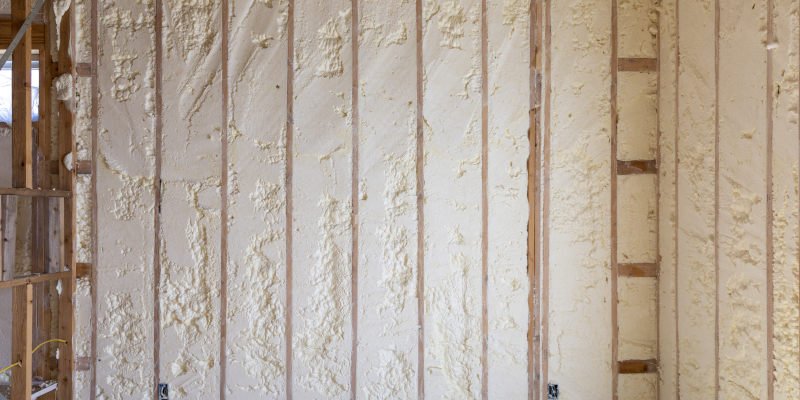
- Open Cell Spray Foam Insulation – As the name suggests, open cell spray foam insulation is characterized by foam bubbles (cells) that are not fully enclosed. Because of the open structure, air can enter the cells, which results in a spongy material. Open cell foam insulation is not as dense as closed cell spray foam insulation, and it has an R value of about 3.5.
- Closed Cell Spray Foam Insulation – Closed cell spray foam insulation, on the other hand, has cells that are completely sealed. The bubbles in this kind of foam are not formed using air; instead, a different gas is used to aid expansion. Where open cell foam is typically applied using water, closed cell spray foam insulation is mixed with high R-value chemicals for installation. Speaking of R-value, the R-value of closed cell foam is about 6, which means it can block more heat than open cell foam.
If you have questions about open or closed cell spray foam insulation, simply give us a call. Our team has the right experience to determine which is best for your needs.